Mud Volcano and Dragons Mouth Spring
Yellowstone at its most primordial
⏱ 45 minutes👤 All ages$
Get Tickets
Get Mud Volcano Tickets
Skip the line · mobile tickets accepted at the door
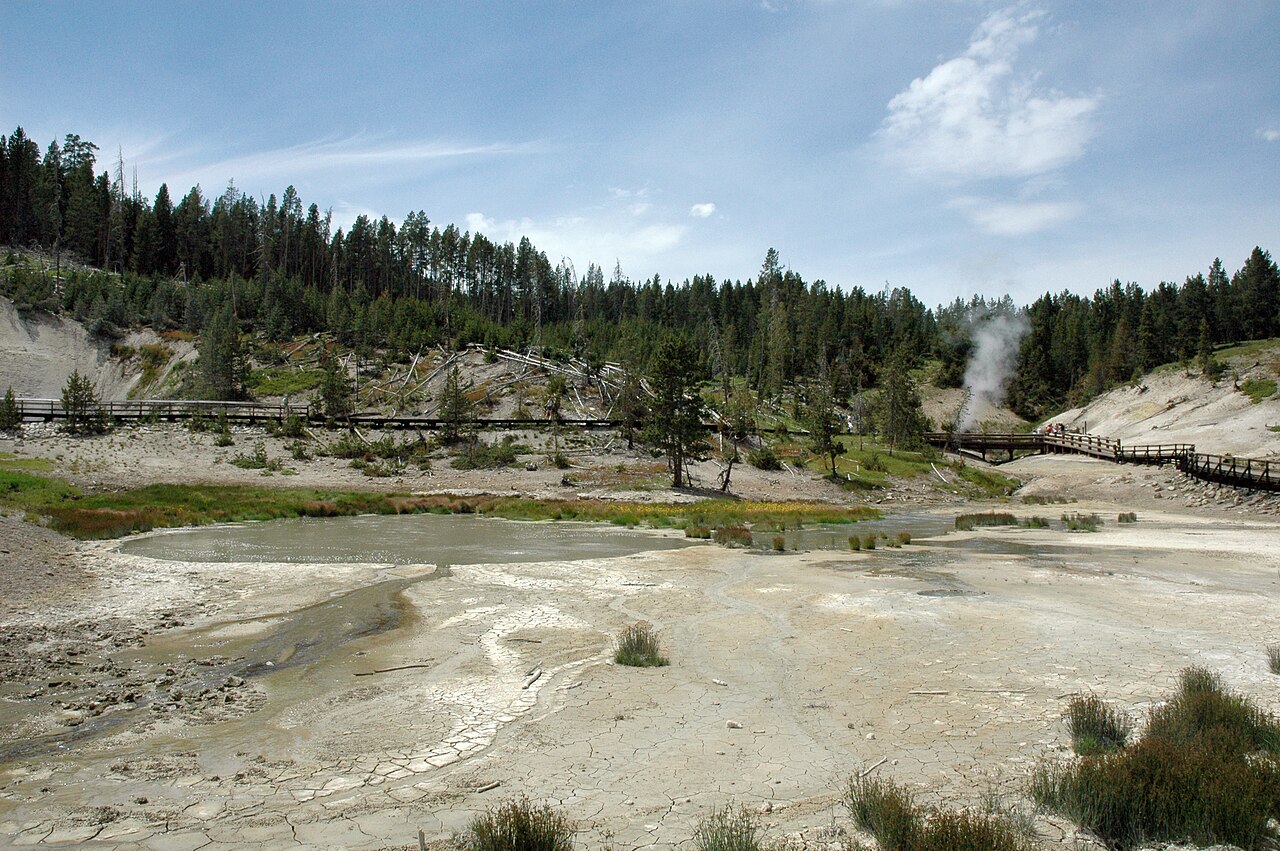
Where Old Faithful is orderly, Mud Volcano is chaos, and that is the appeal. The area is one of the park's most acidic thermal zones, which is why the ground looks bleached and eroded, the vegetation is dead around the vents and the whole hillside seems to be quietly dissolving. Mud pots plop and burp, gas bubbles through the thick clay, and steam rises from several vents at once. It is a science lesson delivered by smell.
Walk the loop clockwise and take your time. Dragons Mouth Spring is the one to wait for, because the surge of water and steam from the cave comes in pulses, and standing at the railing during one is memorable. Sulphur Caldron, closer to the roadside, shows how acidic water can turn a feature yellow and cloudy. Higher up the slope, the mud features show the park's quieter side, with grey, simmering clay and small bursts. The boardwalk has a steeper section, so take it slowly, and remember that the surface here is thin and hot: stay on the boardwalk and keep children close.
Practicalities. Mud Volcano sits between Fishing Bridge and Canyon, so it fits naturally into a day that includes Hayden Valley and the Grand Canyon of the Yellowstone. Dawn and dusk are the best times, both for lighter crowds and because bison and the occasional bear move through the valley. Bring a scarf or a sense of humour for the smell. The Grand Loop roads here are seasonal and close to regular vehicles in winter, so check road status before planning. Fit: curious travelers, families with older children, geology fans and anyone who finds the polished basins a little too tidy. Photographers do best with a polarising filter and a lens cloth, because steam condenses on glass quickly in cool air. If you want to understand why the park smells the way it does, the interpretive signs along the loop explain the acids and gases at work, and they are worth reading while you wait for the next surge from the cave. Allow extra time in July and August when the small parking area fills.
What to Expect
Format
A short boardwalk loop through acidic mud pots, a steaming cave spring and the yellow Sulphur Caldron at the south end of Hayden Valley.
Best Time
Early morning or evening in the summer season, when crowds thin and wildlife is active in the valley.
Duration
Thirty to sixty minutes, including one steeper stretch of boardwalk.
Tips
Expect a sulphur smell, stay on the boardwalk, and give any bison a wide berth. Pair it with Hayden Valley and the canyon on the same drive.
⚡ Quick Picks
Best For
The raw, smelly, wonderfully weird side of Yellowstone's thermal activity.
Families
Older children love the sputtering mud and the cave that breathes steam; keep young ones close to the railing.
Couples
A quick, atmospheric stop between the lake and the canyon.
Pair With
Hayden Valley and the Grand Canyon of the Yellowstone.
Time Needed
Under an hour.
Ready to book Mud Volcano?
Get Tickets →Frequently Asked Questions
What can we see at Mud Volcano?
Bubbling mud pots, hissing fumaroles, the cave-like Dragons Mouth Spring and the acidic yellow Sulphur Caldron, all on a short boardwalk loop.
Why does it smell so strongly?
The thermal gases here contain hydrogen sulfide, which smells like rotten eggs. It is part of the experience and harmless at the boardwalk.
Is the boardwalk difficult?
The loop is short, but one stretch climbs steeply to the upper features. Take it slowly and stay on the boardwalk.
Is it open in winter?
The roads that reach it are seasonal and close to regular vehicles in winter. Check the park's road status before you plan.
Where is it?
On the road between Fishing Bridge and Canyon, at the south end of Hayden Valley.
More Yellowstone Attractions
Browse all →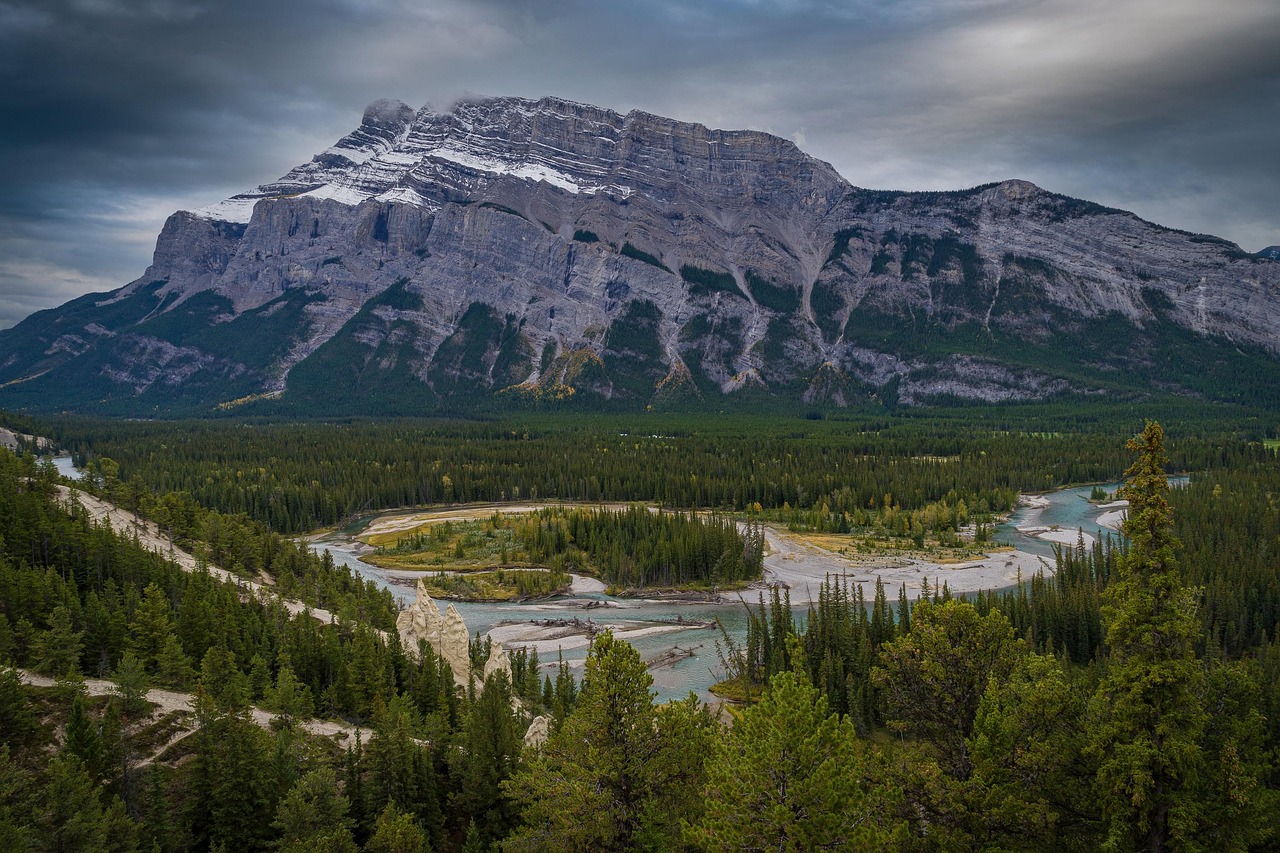
Hayden Valley
The park's central wildlife stage — vast grasslands on the Yellowstone River between Canyon and the lake, where bison jams are a daily ritual, grizzlies cross at dawn, and every pullout is a scope's-length from the show.
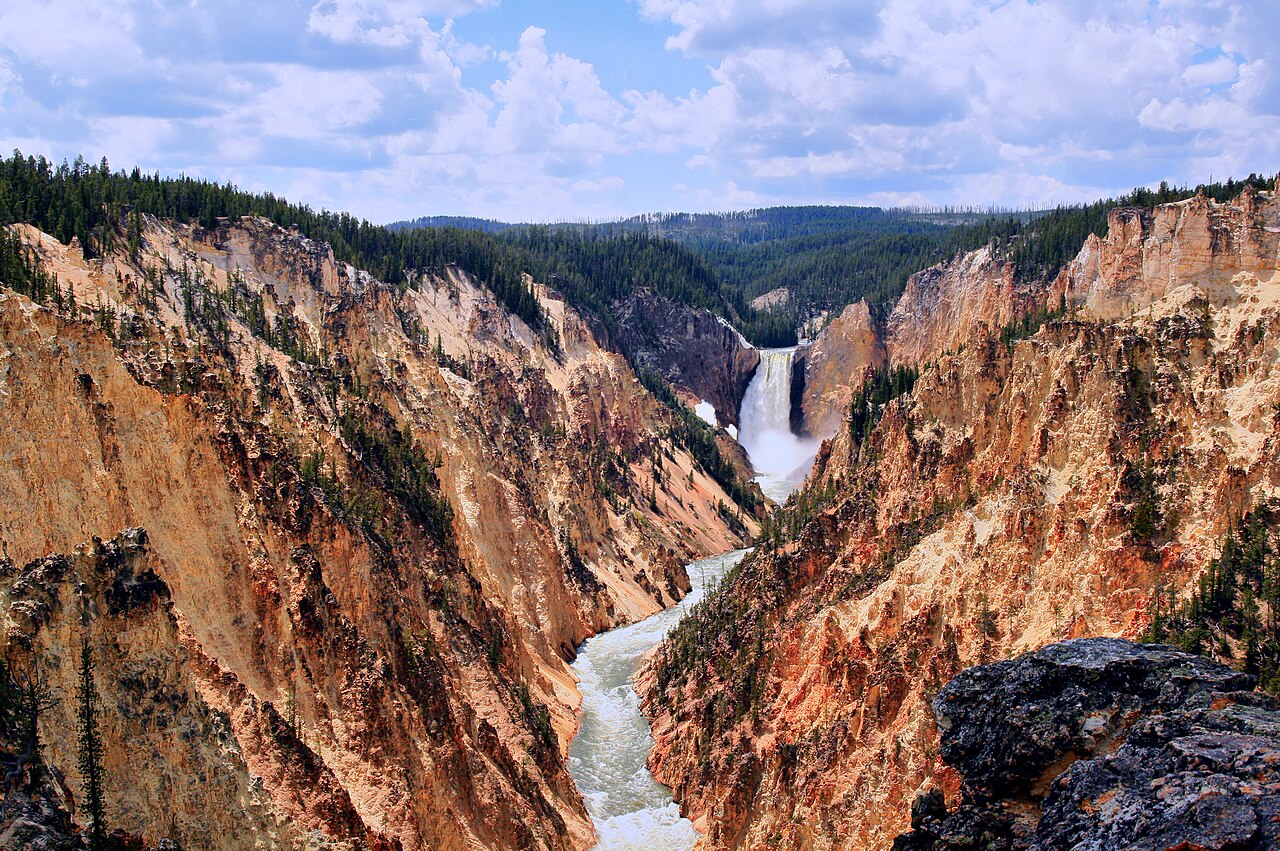
Grand Canyon of the Yellowstone
The park's namesake wonder — a 1,000-foot gorge of yellow, pink, and rust rock with the 308-foot Lower Falls thundering into it, framed from Artist Point and felt from the Brink, where the river vanishes under your feet.
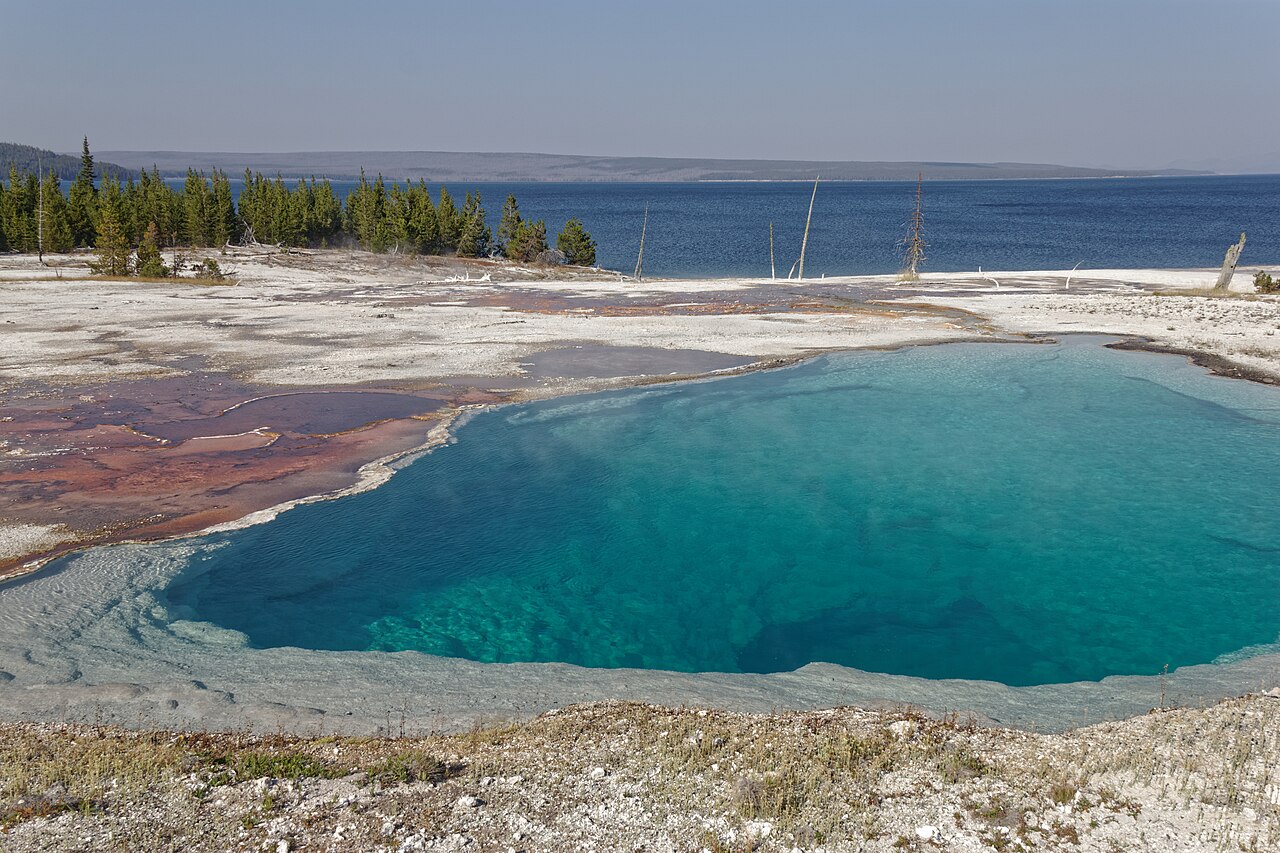
Yellowstone Lake & West Thumb
North America's largest high-altitude lake — 136 icy square miles over a drowned caldera, with West Thumb's geysers steaming at the shoreline, scenic cruises from Bridge Bay, and the 1891 colonnaded hotel on its bank.