Mammoth Hot Springs
The hillside that rebuilds itself daily
⏱ 2-3 hours👤 All ages$
Get Tickets
Get Mammoth Tickets
Skip the line · mobile tickets accepted at the door
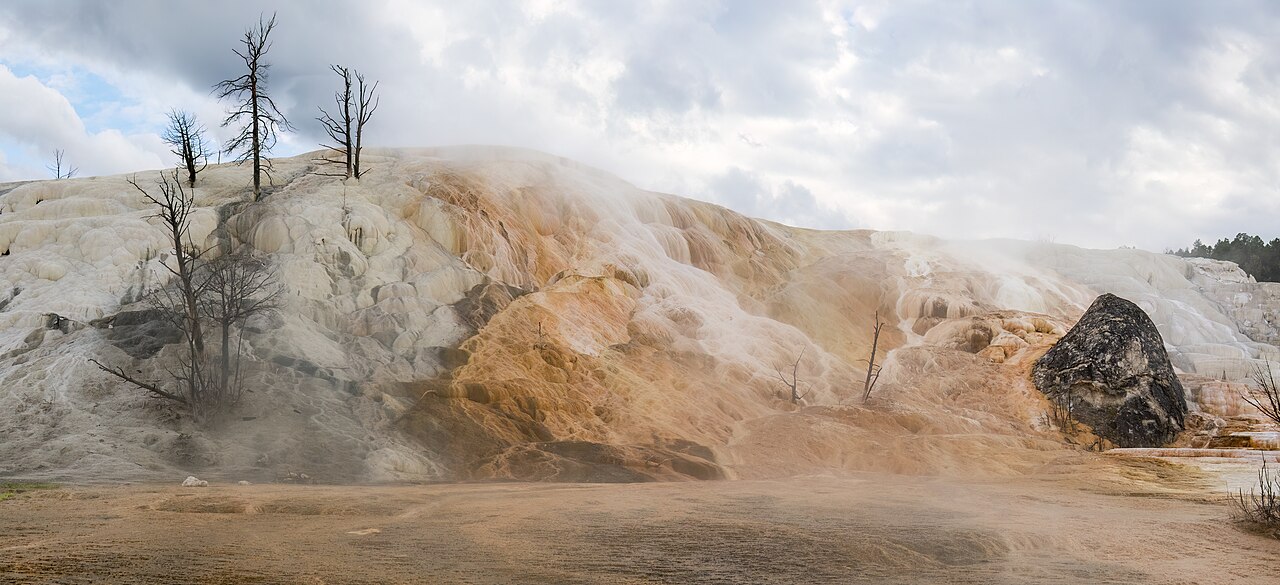
The plumbing differs here and everything follows from it: Mammoth's hot water travels through buried Madison limestone, dissolving it en route, and exhales the load at the surface as travertine — calcium carbonate precipitating into terraced pools, draperies, and cascades at rates visible across seasons (two tons of new rock on busy days). Living terraces run white-to-orange with thermophile color where water flows; abandoned ones bleach to gray sculpture; and the springs' habit of migrating means the hillside literally rebuilds itself — return visits genuinely differ. Palette Spring and Canary Spring (vivid, active) and Minerva Terrace (the classic frozen staircase, currently in a dry spell that may reverse any year) headline the Lower Terraces' boardwalk stack; the Upper Terrace Drive's 1.5-mile loop adds the summit formations and Angel Terrace from the car.
Liberty Cap — the 37-foot dormant hot-spring cone standing sentry at the base — marks the transition to the human layer: Fort Yellowstone, the handsome sandstone post the U.S. Army built when it rescued the young park from poachers (1886-1918), now the park's headquarters district. The Albright Visitor Center's history exhibits are the park's best on the strange Army era; the officer's-row architecture reads instantly; and the parade grounds host Mammoth's most reliable wildlife spectacle — the resident elk herd grazing the lawns year-round, with the September-October rut turning the townsite into a bugling, ranger-managed theater (stay the posted distances; the bulls are in no mood).
Mammoth anchors the park's all-season corner: five minutes from the Gardiner north entrance (the Roosevelt Arch's "For the Benefit and Enjoyment of the People" is the mandatory gateway photo), on the year-round road to Lamar, with the historic Mammoth Hotel, dining, and fuel on site. Terraces take 90 minutes to two hours; add the fort walk and visitor center for a half day. Winter frosts the terraces into their best self — steam, snow, and elk against the formations — reachable by ordinary car when the interior is snowcoach-only.
What to Expect
Format
Travertine terraces climbing a self-rebuilding hillside — Lower Terrace boardwalks past Palette and Minerva, the Upper Terrace loop drive, Liberty Cap, and Fort Yellowstone's historic district with its resident elk herd below.
Best Time
Morning light on the terraces; September-October for the elk rut on the fort lawns; winter for steam-and-snow formations reachable by regular car.
Duration
Two to three hours for terraces and fort; it anchors the northern loop day with Lamar.
Tips
Walk the Lower boardwalks bottom-to-top, then drive the Upper loop. Active springs (Palette, Canary) carry the color — ask rangers which are flowing this season; the terraces rearrange annually. Give rutting elk the whole lawn in fall. The Roosevelt Arch photo stop is five minutes north.
⚡ Quick Picks
Best For
The park's most otherworldly landscape after the geyser basins — and its best history stop.
Families
Elk on the lawns are the guaranteed hit; boardwalk tiers let short legs tap out gracefully.
Couples
Winter terraces at dawn — steam, frost, and nobody — then breakfast at the historic hotel.
Pair With
Lamar Valley on the same all-season road, or Gardiner's gateway restaurants five minutes north.
Time Needed
A half morning.
Ready to book Mammoth?
Get Tickets →Frequently Asked Questions
Why does it look different from the geyser basins?
Different rock — the water here rises through limestone, emerging to build travertine terraces rather than geyser cones. It's the same heat with a different canvas, remodeling itself constantly.
Are the terraces still active?
Very — springs migrate around the hillside year to year, so some formations run vivid while others rest dry. Rangers at Albright can point to the season's liveliest.
What's with the elk in town?
A resident herd has adopted Fort Yellowstone's lawns for generations — year-round lounging, with the autumn rut bringing bugling bulls and ranger crowd control. Admire from the posted distances.
What's Fort Yellowstone?
The 1890s Army post from the era when cavalry ran the park — now headquarters, with officer's-row architecture and the Albright Visitor Center's excellent exhibits on the strange story.
Can we visit in winter?
Yes — Mammoth sits on the park's only all-season road (Gardiner to Cooke City), ordinary car access when the interior is closed, and the frosted terraces are arguably their best version.
More Yellowstone Attractions
Browse all →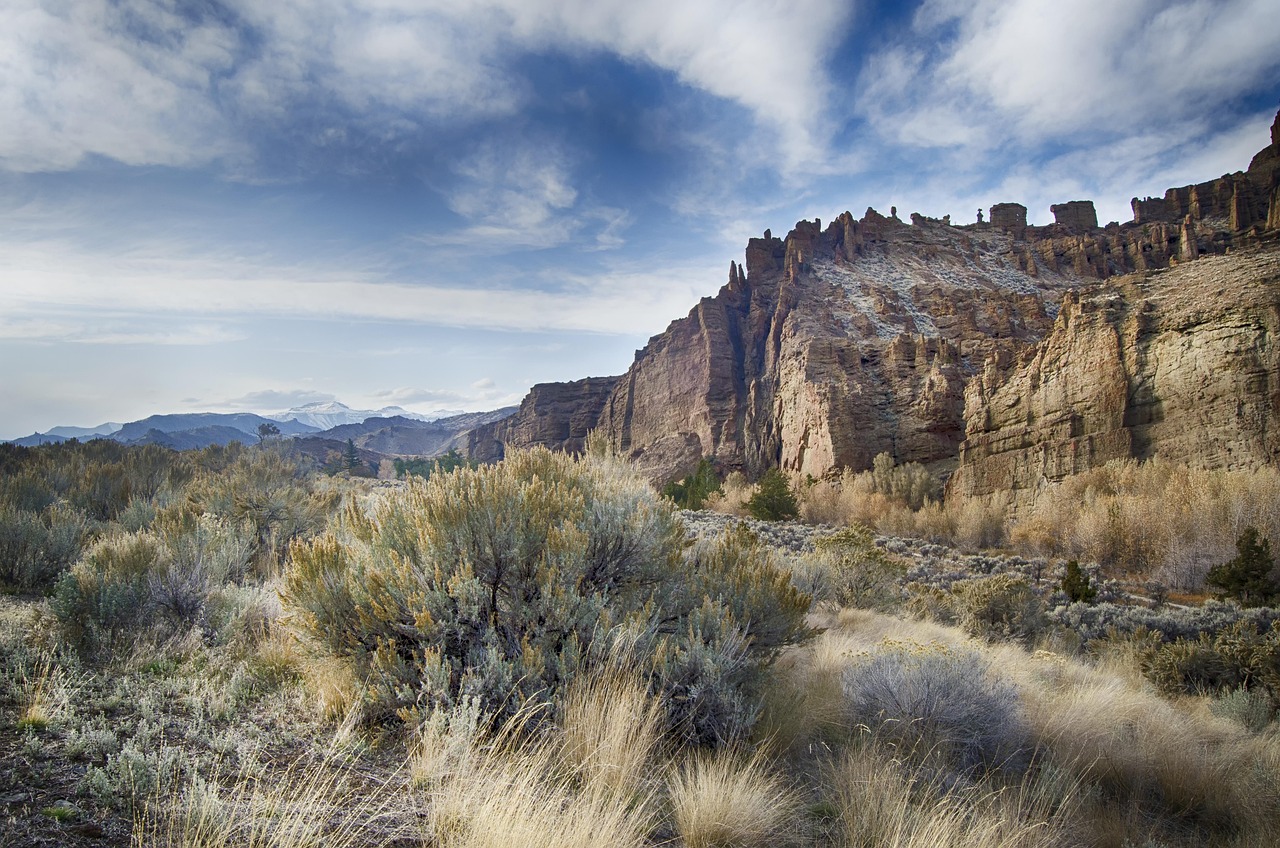
Lamar Valley
America's Serengeti — the broad northeast valley where wolf packs hunt, bison herds blanket the flats, grizzlies work the edges, and dawn with a spotting scope is the best wildlife show in the hemisphere.
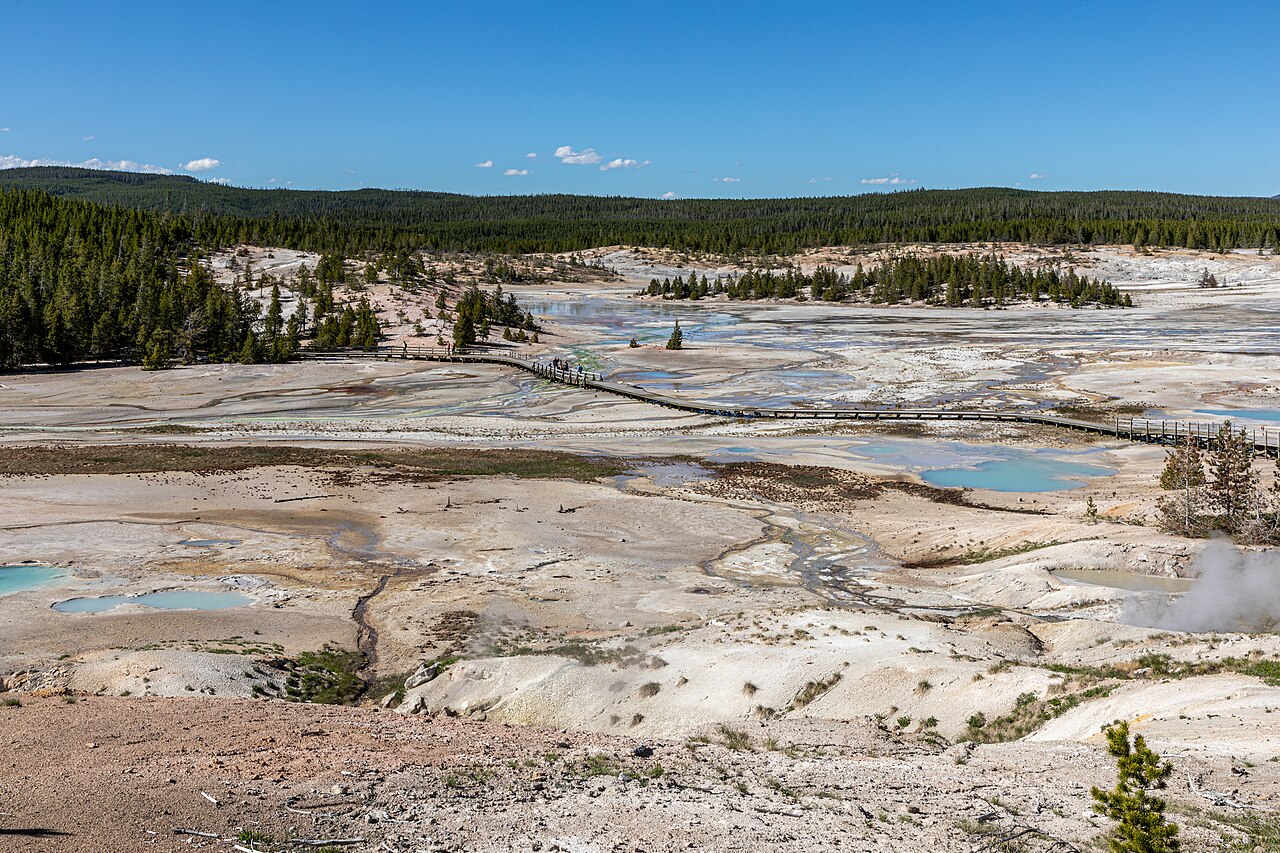
Norris Geyser Basin
The park's hottest, strangest basin — home of Steamboat, the world's tallest active geyser, the milky-blue acid pools of Porcelain Basin, and thermal ground so restless it rewrites its own map between visits.
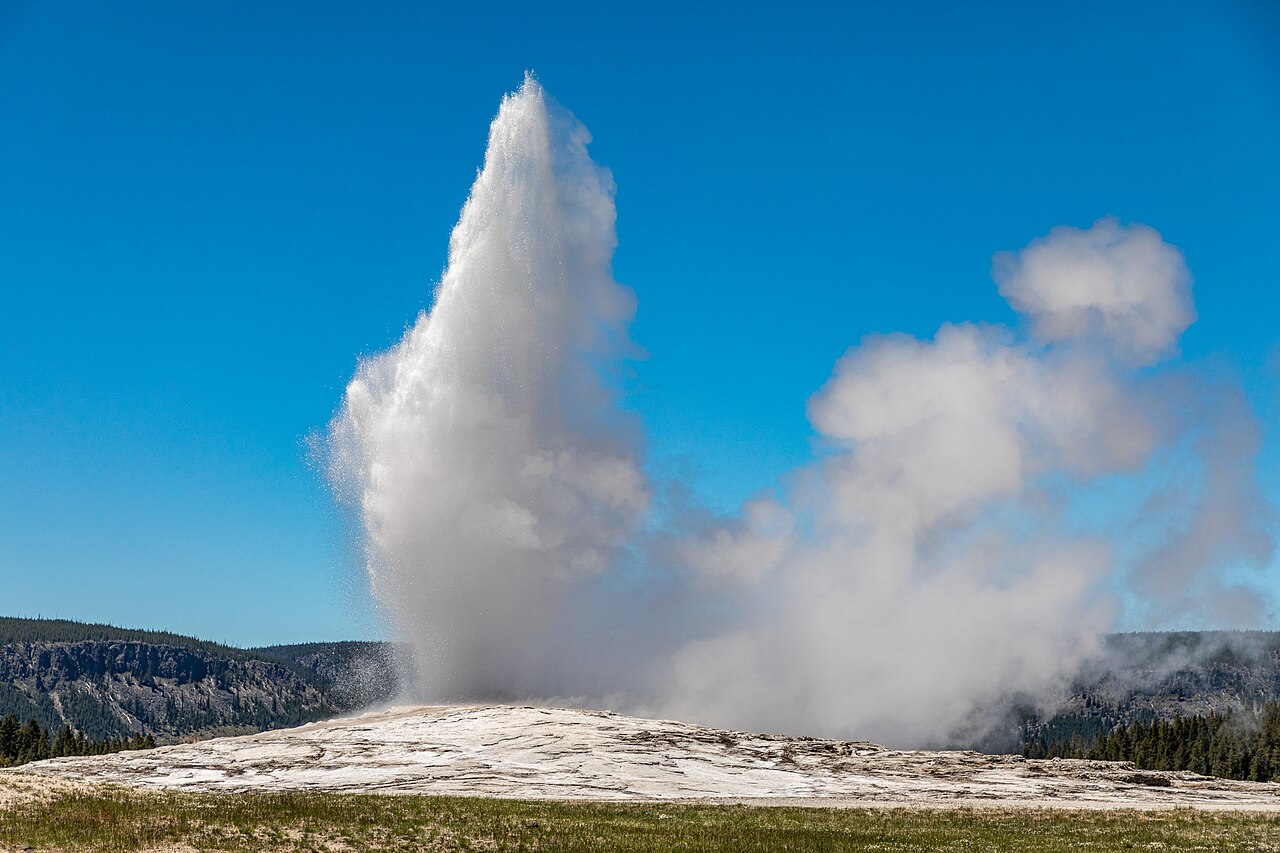
Old Faithful & the Upper Geyser Basin
The world's most famous geyser, erupting on schedule roughly every 90 minutes — surrounded by the densest geyser field on earth, boardwalks past Morning Glory Pool, and the log cathedral of the Old Faithful Inn.